Fostering the next generation of the world's most dynamic life science problem-solvers, innovators and inventors
Future Biotechnologists is a charity that aims to inspire students in the UK and around the world to consider a career in the life science sector by making real connections between volunteers in local life science companies and students in local schools and colleges. We show students that the life science sector is one of the most rewarding, dynamic and interesting sectors they can join for a long-term career.
Our activities are designed to widen access to all parts of the community by ensuring that participation is free for everyone. We have an exciting range of programmes rolling out over the next year.
See below a selection of those programmes. Email us on hello@futurebiotechnologists.org to be put on the mailing list for updates.
Deep interactions
Through our programmes students interact with experts and scientists in the life sciences.
Widening access
We prioritise access in all our programmes to disadvantaged and minority communities.
Pilot launching January 2027 • Free for participating schools
The UK Schools AMR-AI Challenge 2027
Help students tackle antimicrobial resistance through science, data and responsible AI.
A real health challenge
The Challenge invites students aged 14–18 to investigate antimicrobial resistance (AMR) in healthcare settings and the community. Using reliable scientific evidence, approved datasets and responsible applications of artificial intelligence, students will be asked to come up with evidence-based solutions to address the challenge of AMR.
Projects may include developing a dashboard to monitor resistance trends or designing tools for improving infection prevention. Students will check AI outputs against reliable sources, document their reasoning and explain the practical and ethical limitations of their work.
Along the way, students will build skills in evaluating evidence, questioning AI, teamwork and communication, discover careers in science and technology, and gain a project to discuss in future applications and interviews.
How the pilot works
Following onboarding in early 2027, teams of three to five students will work over four to six weeks during the first half of the year, supported by teachers and volunteer mentors. The pilot will help us refine the Challenge before a wider rollout.
No previous coding experience is required. Teams can develop a concept or explanation as well as a working prototype, using accessible resources and school-approved tools. Teacher materials and project guidance will help schools fit the work into lessons, enrichment or supervised clubs.
Participation is free, with priority given to schools in disadvantaged communities and students under-represented in STEM. Teams will share their findings with their peers and wider community through school-approved communications.
Could you help inspire the next generation of life scientists?
We are looking for volunteers to mentor students aged 14–18 for a few hours online as they explore AMR using data and responsible AI. You will help students develop ideas, assess evidence and connect their projects with real-world science.
We welcome experience in life sciences, healthcare, AMR, data science, machine learning or AI. Mentoring will take place in teacher-supervised group sessions, with arrangements agreed with the school and programme coordinator. Your experience could build young people’s confidence and open their eyes to the many possible careers in the life science sector.
Real world skills: The objective of the Challenge is to engage school and college students (ages 14–17) in real-world biotechnology and pharmaceutical problem-solving and innovation through hands-on investigation and creative skills. It aims to equip students with scientific, investigative, team working and presentational skills.
The competition starts with an online inspiration/onboarding session and continues with team projects, the best of which are then entered into regional and national finals.
Local mentoring and support: At all stages schools will be provided with support, guidance and mentorship from young scientists, biotech entrepreneurs and pharma professionals locally.
The competition is designed for the TikTok generation with the creation of engaging reels and social media content for platforms like TikTok and Instagram an integral part of the challenge for the students.
Regional winners will be invited to participate in one or more finals online or at major life sciences or academic venues. Judging will be done by panels of teachers, academic and industry scientists and sponsor representatives.
We inspire students to consider a career in the life science sector by connecting volunteers in local life science companies and students in local schools and colleges
The London Programme
Partnering to create a difference for disadvantaged students in inner London
The Programme enables young people in London (ages 14–19) to learn about emerging next-generation convergent technologies and opens a window into career pathways in high-growth industries. The Programme hosts online and in-person events in schools and colleges in disadvantaged parts of inner London, connecting students with mentors and employers.
A core element of the London Programme is to engage students in practical challenges and activities.
Volunteers and experts with relevant expertise, will help guide the students through practical activities and challenges.
At the end the students will be asked to give presentations to volunteers from the sector and teachers from participating schools.
Challenges could include the simulation of a clinical trial to get students to understand how new treatments get tested, evaluated and approved or training a computer model to recognise objects or emotions using machine learning or artificial intelligence.
Below, Jack and Matthew, two students from east London describe what they found inspiring about our event in Leytonstone.
Making a difference to London
The Programme empowers disadvantaged inner-London communities in Camden, Hackney, Lambeth, Lewisham, Islington, Newham, Paddington (Westminster) and Southwark.
Empowering London communities
The London Programme focuses on inspiring and informing London students about converging and emerging technologies including artificial intelligence, robotics and drone technologies.
Career carousels
Engaging students with volunteers from the life science community
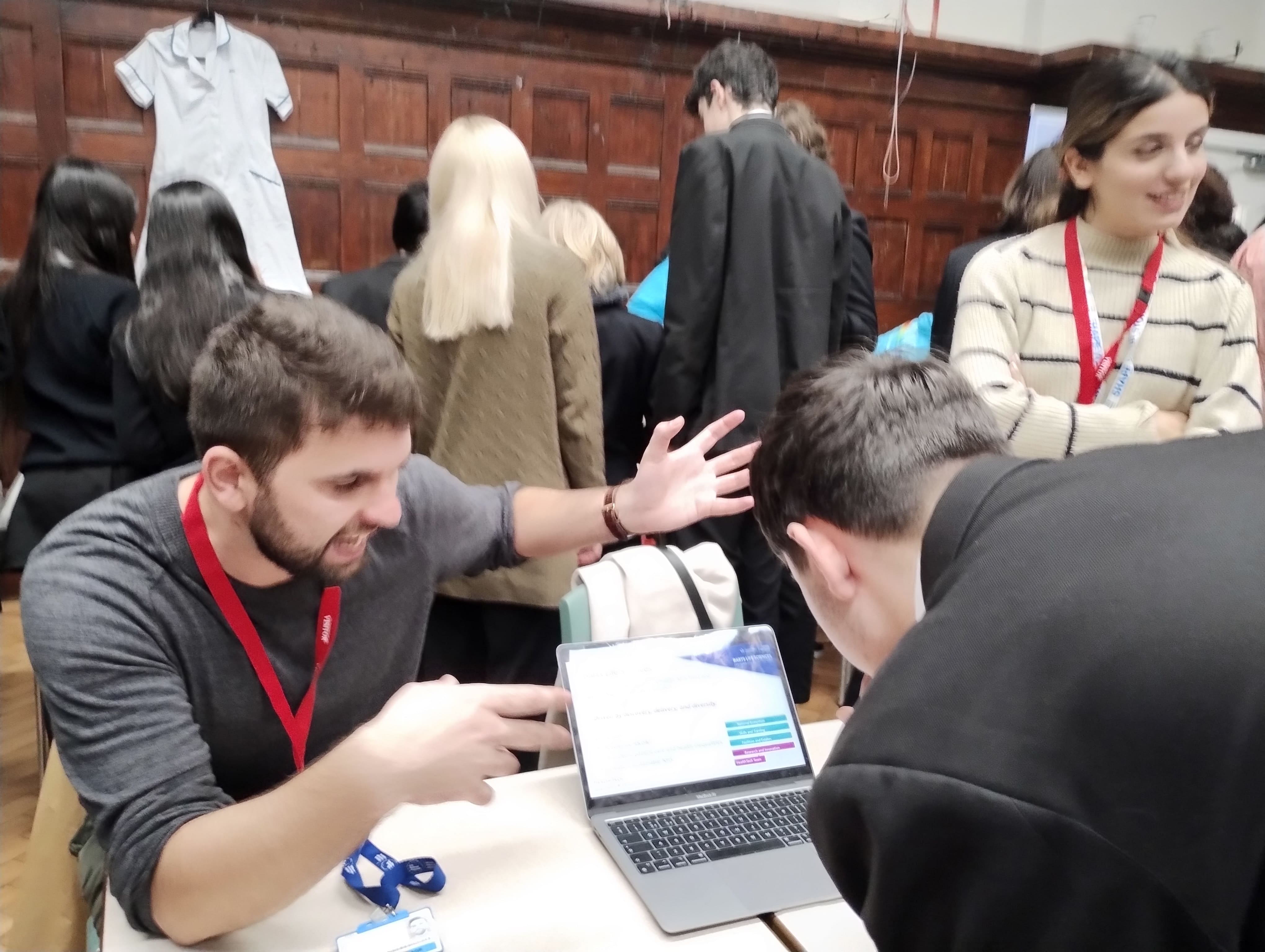
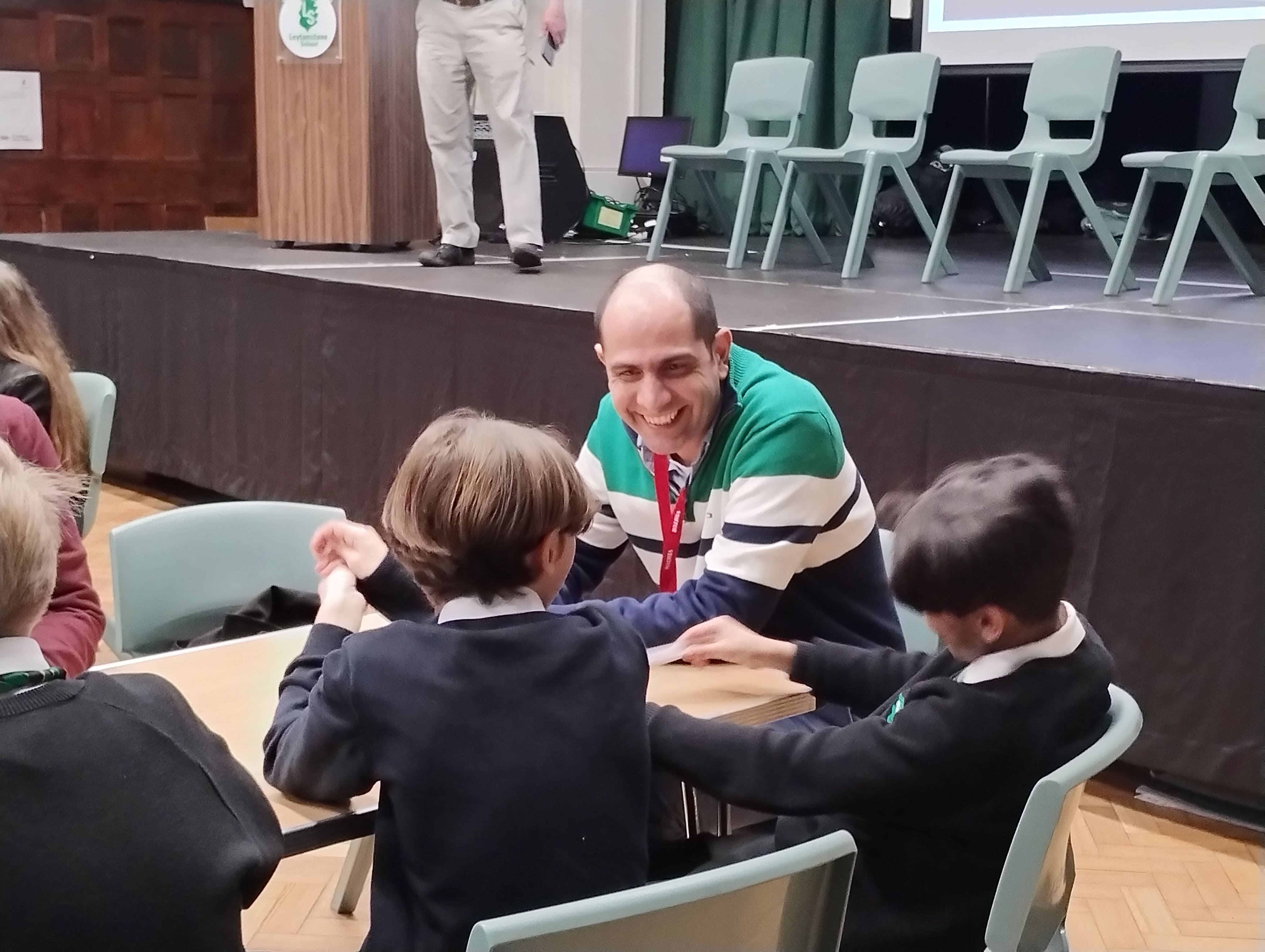
We hold career carousel events in schools across the country to bring together students and volunteers from local life science companies. Previous events were held in the UK in Holton (Oxfordshire), Cambridge, Pinner and Leytonstone. These events have proved very popular with students, teachers and volunteers. The event in Holton was described by Rebecca Vaughan, Careers & Work Experience lead at Lord Williams's School as: "...the best external careers event I've attended (of which there have been quite a lot over 12 years!)."
One student who attended the Leytonstone event said: "It was a phenomenal experience as I was able to find my dream job. It was really a life-changing experience."
Another said: "The event I attended today was an incredibly interesting event. All of the scientists were very friendly, and shared their ideas, knowledge, research and experiences in a way that all of us involved found something of interest. I also found it intriguing because it broadened my perspective of the people involved in the world of science."
Contact us if you would like to find out hosting a career carousel in your school or college or volunteering to participate in future events.